Sincerity & Integrity
“Shisei (至誠)”
The commitment to act with sincerity, honesty, and moral integrity in every relationship and decision. Without genuine internal conviction, no institutional undertaking withstands historical scrutiny.
Rooted in the teachings of Ninomiya Kinjiro, Houtoku is a philosophy of balance, diligence, moderation, and contribution. Reinterpreted by Ninomiya Group, it provides an ethical and institutional foundation for creating value that extends beyond individual interests.
Ninomiya Kinjiro (1787–1856), also known as Ninomiya Sontoku, was a Japanese thinker, agricultural reformer, and social organizer whose ideas helped transform communities during the Edo period.
Born into a farming family and orphaned at a young age, he overcame extraordinary hardship through self-education, discipline, and practical observation, rising from rural origins to advise feudal domains across Japan.
He developed the Houtoku system, connecting personal cultivation, productive work, responsible resource stewardship, and contribution to the common good to revitalize communities and strengthen economic and social resilience.

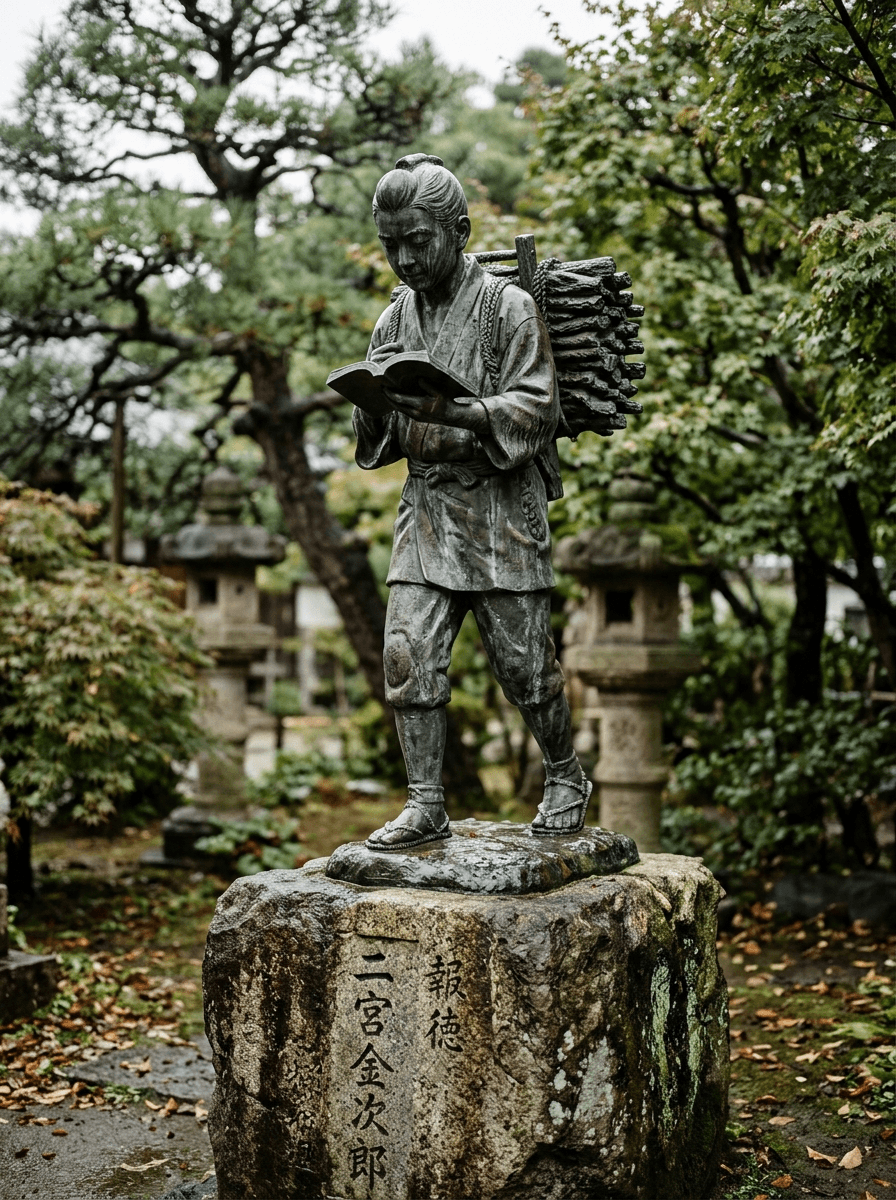
Houtoku (報徳) is understood as recognizing and returning virtue through gratitude, reciprocity, and contribution. Its central insight is that individual progress and collective well-being are not opposing objectives, but mutually reinforcing outcomes.
Awareness of natural conditions, social foundations, inherited knowledge, and mutual human support.
Conscious stewardship of human faculties, time, capital, and ethical commitments.
Active channeling of disciplined effort toward the material and ethical strengthening of society.
Sustainable value creation generating collective resilience across generations.
The Houtoku philosophy is expressed through four interconnected principles offering a practical framework for how individuals and institutions build lasting value.
“Shisei (至誠)”
The commitment to act with sincerity, honesty, and moral integrity in every relationship and decision. Without genuine internal conviction, no institutional undertaking withstands historical scrutiny.
“Kinrō (勤労)”
The recognition of work, discipline, and continuous effort as foundations of individual development and collective progress.
“Bundō (分度)”
Conscious management of resources, respecting limits, establishing clear priorities, and maintaining balance between needs and possibilities.
“Suijō (推譲)”
The willingness to share and direct part of one's achievements toward the development and well-being of others and future generations.
Ideas associated with Ninomiya Kinjiro have informed Japan's broader cultural and management dialogue on business ethics, organizational discipline, long-term stewardship, and harmony between enterprise performance and community prosperity.
Organizational culture valuing continuous improvement (Kaizen), respect for people, operational discipline, and ecosystem-wide development.
Management benchmark recognized for concentric 'tree-ring' growth, prioritizing human development and long-term continuity over volatile short-term expansion.
Contemporary enterprise translating contribution principles into modern digital commerce, cultivating organizational synergy and ethical responsibility.
NINOMIYA SONTOKU — AN ANIMATED SHORT FILM (2019)
In 2019, Ninomiya Group produced an animated short film portraying the life and legacy of Ninomiya Sontoku.
Through visual storytelling, the production introduces his journey, teachings, and the principles that shaped the Houtoku philosophy, bringing this historical figure closer to contemporary audiences.
The short film received two cultural awards recognizing its contribution to preserving and disseminating this philosophical heritage.
Film unavailable for playback on this website.
NINOMIYA SONTOKU
Animated Short Film · Original Ninomiya Group Production
NEO-HOUTOKU — HUMAN AND SOCIAL DEVELOPMENT PROGRAM
Developed within the Social Business Division of Ninomiya Group, the Neo-Houtoku Program translates Houtoku principles into a contemporary methodology supporting social initiatives in professionalization, organizational strengthening, and financial sustainability aligned with the United Nations Sustainable Development Goals (SDGs).
Supporting the professionalization and organizational maturity of social initiatives through structured governance frameworks and strategic guidance.
Encouraging viable operational structures, responsible financial management, and long-term continuity independent of transient donations.
Supporting initiatives aligned with measurable community outcomes and the United Nations Sustainable Development Goals.
Inspired by the legacy of Ninomiya Kinjiro, Ninomiya Group confers two institutional honors recognizing individuals and organizations whose actions express discipline, contribution, responsibility, and social development.
“Honoring those who preserve traditions through action.”
An institutional tribute created by Ninomiya Group to honor Brazilians without Japanese ancestry who preserve, practice, and disseminate the traditions of Budō across generations and communities in Brazil, inspired by archival depictions of Ninomiya Kinjiro in formal samurai attire.
“Recognizing social initiatives that turn purpose into lasting impact.”
An institutional tribute recognizing organizations that develop social businesses and demonstrate validated initiatives with positive societal outcomes, combining social purpose, responsible management, and concrete contribution to collective well-being.
“True prosperity is not measured only by what we receive, but also by what we contribute.”
A reflection attributed to Ninomiya Kinjiro captures the essence of reciprocity through a clear image:
“Take a basin filled with water. Try to pull the water toward yourself with both hands, and you will notice that it moves away in the opposite direction. What is remarkable is that the more you push it away toward the other side, the more water returns to you.”
Discover how Ninomiya Group translates the principles of Houtoku into institutional relationships, business development, and social initiatives.